
Social media generates attention.
It generates comments.
It generates DMs.
It generates “Send me the link” messages.
But for many businesses, it doesn’t consistently generate revenue.
The problem isn’t traffic.
It’s what happens after someone interacts.
This article is about one specific challenge:
High engagement, low conversion, because follow-up is manual, inconsistent, or slow.
We’ll break down why this happens and how to build a simple automated DM system that turns conversations into predictable sales, without sounding robotic or spammy.
The Core Issue: Manual Follow-Up Is a Silent Revenue Killer
Let’s say you post a reel and it performs well.
You get:
- 200 comments
- 75 DMs
- 40 “Send me the link” replies
Sounds great, right?
Now reality kicks in:
- You reply hours later.
- You forget 10–15 people.
- Some messages get buried.
- You copy-paste links manually.
- You don’t track who clicked.
- You don’t follow up with non-buyers.
Momentum dies.
In social media, speed equals conversion.
The longer the delay, the colder the lead.
Most businesses underestimate how much revenue leaks here.
Why Engagement Doesn’t Automatically Equal Sales
There are four main bottlenecks.
1. Response time
If someone comments “LINK” and waits 3 hours for a reply, intent drops dramatically.
Social intent is fragile.
It peaks in the moment.
2. Inconsistent messaging
When responses are manual:
- tone varies
- links get mistyped
- CTAs are unclear
- follow-up is forgotten
You don’t have a system, you have improvisation.
3. No segmentation
Not everyone who comments is the same.
Some are:
- curious
- ready to buy
- price sensitive
- just exploring
If you treat everyone identically, you reduce conversions.
4. No structured follow-up
Most sales happen after the first message.
But manual DM conversations rarely include:
- reminder messages
- objection handling
- deadline nudges
- value reinforcement
Without structure, leads disappear.
The Fix: Build an Automated Conversation Funnel
Instead of manually replying to every comment and DM, you create a structured path.
This doesn’t mean robotic spam.
It means:
- instant responses
- guided conversation
- behavior-based follow-up
- tracking who clicked and who didn’t
Let’s walk through a practical framework.
Step 1: Turn Comments into Automatic Conversations
If your content regularly says:
- “Comment ‘GUIDE’ and I’ll send it to you”
- “DM me ‘INFO’ for details”
- “Type ‘PRICE’ below”
You should not be replying manually.
Instead, set up a system where:
- The moment someone comments a keyword
- They automatically receive a DM
- The DM delivers value + next step
Tools like ManyChat are built exactly for this, connecting Instagram (and other platforms) with automated conversation flows.
But the important part is the strategy:
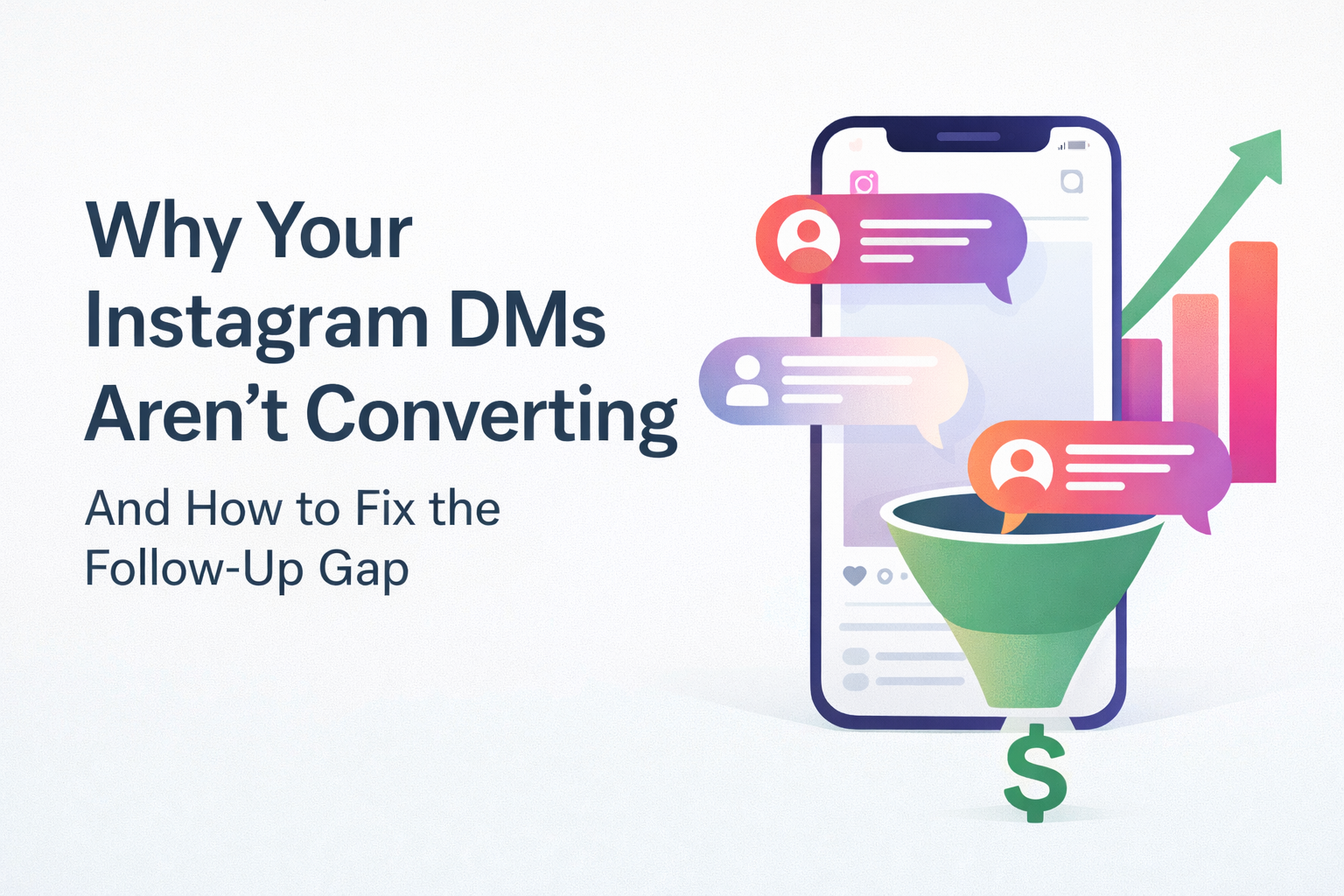
Engagement → Instant DM → Clear next action
Speed alone can double conversions.
Step 2: Structure the DM Like a Micro-Sales Funnel
Most automated messages fail because they try to sell immediately.
A better structure looks like this:
Message 1 (Instant):
“Hey 👋 Thanks for your interest in [topic].
Quick question, are you looking for [Option A] or [Option B]?”
This creates engagement instead of pushing a link.
Message 2 (Based on response):
Provide relevant info.
Message 3:
Deliver the link with context:
“Here’s the guide. It walks you through X, Y, Z.”
Now the link is framed, not dropped.
Step 3: Tag and Segment Based on Behavior
This is where automation becomes powerful.
You can tag users based on:
- Which keyword did they used
- Which button did they clicked
- Whether they clicked your link
- Whether they replied
This allows follow-up that feels personalized.
Example:
If they clicked but didn’t buy:
“Just checking, did you have any questions about the offer?”
If they didn’t click:
“Looks like you didn’t grab the link earlier. Want me to resend it?”
ManyChat and similar chat automation tools allow tagging and conditional logic so conversations adapt to user behavior.
Step 4: Add Timed Follow-Up Without Being Pushy
You don’t need aggressive sales language.
You just need structure.
Example follow-up sequence:
- Day 0: Deliver link
- Day 1: Value-based reminder
- Day 2: Case study or proof
- Day 3: Soft urgency (“closing tonight” if applicable)
The key is subtle persistence.
Most businesses simply never follow up.
Step 5: Bridge DM → Email → Sales Page
DM automation works best when it’s connected to a broader funnel.
For example:
- DM delivers lead magnet
- User opts into email
- Email nurtures
- Sales page converts
Instead of isolated DMs, you now have a full ecosystem.
ManyChat integrates with email platforms and CRM systems, allowing this connection to happen automatically, but again, the tool supports the strategy.
Step 6: Use Automation Without Losing Humanity
Automation fails when it feels fake.
Keep it human by:
- Writing conversational copy
- Using short messages
- Asking simple questions
- Avoiding overly long paragraphs
- Not over-automating every reply
The goal isn’t to remove humans.
It’s to remove delay and inconsistency.
What This Looks Like in Practice
Let’s say you sell a course.
Before automation:
- 100 comments
- 60 manual replies
- 15 sales
After automation:
- 100 comments
- 100 instant DMs
- 70 link clicks
- structured follow-up
- 25–30 sales
Same audience.
Better system.
Where Tools Like ManyChat Fit In
You could technically build this manually with extreme discipline.
But platforms like ManyChat exist to:
- Trigger DMs automatically from comments
- Build visual conversation flows
- Tag users based on behavior
- Send follow-ups
- Connect with email tools
- Track clicks and actions
It removes manual friction so you can focus on messaging and offer optimization instead of copy-paste replies.
It’s not about the tool.
It’s about closing the follow-up gap.
Key Takeaways
- Social engagement does not equal revenue without structured follow-up.
- The speed of response dramatically affects conversion rates.
- Automated DMs increase consistency and prevent lead leakage.
- Behavior-based segmentation improves sales without increasing traffic.
- Tools like ManyChat support this system by automating comment triggers, DMs, tagging, and follow-up, but strategy comes first.
Final Disclaimer
This article reflects our experience and perspective. Results depend on your audience, offer, and execution. Always test and refine based on your data.